A gentle path to presence through mindfulness
Have you ever noticed how often your mind pulls you away from the present moment? Maybe you’re washing dishes but mentally rehearsing a difficult conversation. Perhaps you’re in a meeting but your thoughts are stuck on something that happened yesterday. Or maybe your mind races so quickly through worries and plans that you barely notice the life unfolding right in front of you.
You’re not alone in this experience. Many of us live with our attention scattered across past regrets, future anxieties, and endless digital distractions. We move through our days on autopilot, disconnected from our bodies, our surroundings, and the wisdom that lives in the present moment.
Understanding Mindfulness and Present-Moment Awareness
What is Mindfulness?
One definition of mindfulness I think is helpful is: “A state of awareness we can cultivate that allows us to be grounded, on purpose, in the present moment, without judgment, and with a sense of compassion.”
What Changes When We Learn to Be Present
Before developing a mindfulness practice, many people describe feeling at the mercy of their thoughts—believing every worry, rumination, and self-criticism that crosses their mind. The inner landscape feels chaotic, overwhelming, or sometimes just numb.
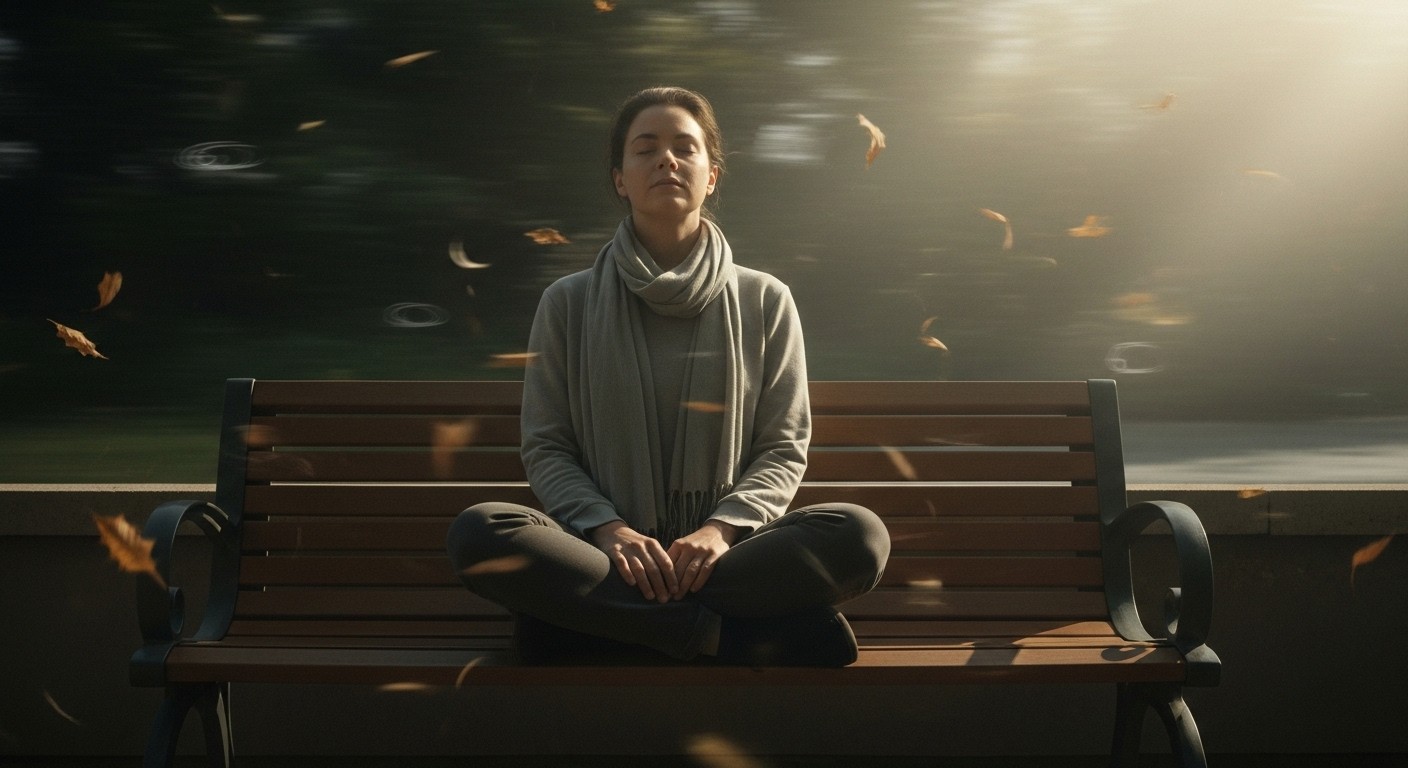
“It’s like I’m constantly bracing for something,” clients often tell me in our first sessions. “Even when things are objectively fine, my mind won’t let me relax.”
With mindfulness practice, something shifts. Sometimes dramatically at first, when a person first realizes they don’t need to listen to every thought they have or believe every thought they have. Moving forward, there are often quiet moments of noticing: “Oh, I’m having that thought again. But I don’t have to follow it down that familiar path.” The space between stimulus and response widens. Breath by breath, there’s more room to choose how to respond rather than simply react.
Maria’s Journey: From Vigilance to Peace
I remember working with Maria, who came to therapy exhausted from decades of hypervigilance. Growing up in an unpredictable household, she’d learned to scan constantly for danger—a survival skill that had long outlived its usefulness. Her mind never stopped analyzing, planning, and worrying. What helped you survive back then may be keeping you stuck now.
“I feel like I’m always on guard,” she shared in our first session. “My body is tense all the time. I can’t remember what it feels like to truly relax.”
We started with very simple mindfulness practices—just noticing her breath for three minutes each morning. At first, Maria found it excruciating to sit still with her thoughts. But gradually, she began to recognize patterns in her thinking and sensations in her body that signaled when she was slipping into hypervigilance.
“I never realized how much energy I spent believing every alarming thought that crossed my mind,” she told me months later. “Now I can sometimes watch those thoughts float by without grabbing onto them. Not always—but enough that I’ve started to feel moments of actual peace.”
How Mindfulness Transforms Your Mind and Body
What Your Mind and Body Learn Through Mindfulness
Mindfulness isn’t about emptying your mind or forcing yourself to feel calm. It’s about developing a different relationship with your experience—one that allows for greater choice and freedom:
Coming Home to Your Body
Many of us, especially those who’ve experienced trauma, have learned to disconnect from our bodies as a way of coping with overwhelming sensations. Some things live in the body long after the mind has moved on. Mindfulness offers a gentle way back into your embodied experience. You begin to notice physical sensations with curiosity rather than fear. That tightness in your chest, the shallow breathing, the clenched jaw—these become messengers rather than enemies.
Watching Thoughts Without Becoming Them
Our minds generate thousands of thoughts each day. Without mindfulness, we tend to believe and follow most of them, especially the negative ones. And when we closely identify with our thoughts, they become rigid, concrete-ized, black and white. With practice, you begin to see thoughts as mental events rather than facts. “I’m a failure” becomes “I’m having the thought that I’m a failure”—creating crucial breathing room between you and your inner critic.
Catching the Autopilot Mind
Those habitual thought patterns that keep you stuck in worry, self-criticism, or rumination become more visible—and therefore less powerful. You notice when you’re moving through life on old, unconscious patterns, rather than being truly present. It’s like gently waking up in your own life.
Learning Self-Compassion Through Presence
Perhaps the most profound shift that can come with mindfulness practice is developing a kinder relationship with yourself. Instead of harsh self-judgment when your mind wanders (which it naturally will), you practice gently returning your attention to the present moment. This simple act—noticing without judgment, and beginning again—gradually reshapes how you relate to your own humanity.
The Science Behind Mindfulness Healing
Evidence-Based Benefits of Mindfulness Practice
What makes mindfulness so powerful isn’t just that it feels good—it’s that it actually changes how your brain and body function. Research consistently shows that regular mindfulness practice:
- Reduces activity in the amygdala (the brain’s alarm system)
- Strengthens the prefrontal cortex (involved in attention and decision-making)
- Decreases stress hormones like cortisol
- Improves immune function
- Enhances overall emotional regulation
- Can reduce blood pressure and improve cardiac functioning
These aren’t just claims—they’re measurable changes that explain why mindfulness has moved from the margins to the mainstream of mental health care. There have literally been thousands of research studies on mindfulness in the last couple of decades.
Alex’s Story: Finding Freedom from Thought Spirals
Another client, Alex, came to therapy feeling constantly hijacked by their own mind. They’d describe their thoughts as a relentless, critical inner voice, often saying, “I just can’t control what I think, it’s always so negative.” They felt trapped, living in a constant state of internal vigilance.

As we gently explored mindfulness together, Alex didn’t learn to silence that voice, but rather to change their relationship with it. Over time, they started noticing the gaps between thoughts, recognizing that a thought was just that—a thought. It didn’t have to define them or demand their immediate belief.
“I used to think mindfulness meant having no thoughts,” Alex shared after several months of practice. “Now I understand it’s about noticing thoughts without getting tangled in them. There’s a freedom in that I never expected.”
How We Use Mindfulness in Therapy
Mindfulness as a Tool for Healing
In our sessions together, mindfulness becomes a powerful tool for healing. It helps us:
Notice Patterns Without Judgment
Together, we gently observe the patterns that show up in your thoughts, emotions, and body sensations. This isn’t about analyzing what’s “wrong” with you—it’s about understanding, with compassion, how your mind and body have tried to keep you safe.
Learn how to Live More in the Present Moment
When our minds are focused on something that could go wrong in the future, it creates anxiety. When our minds focus on things that went wrong in the past, it leads to regret, sadness, even depression. Our minds can act like pendulums that constantly swing between worrying and regretting. And, your life actually takes place in the present moment. When we can develop present moment awareness, we learn what it is like to rest in our natural presence.
Develop Emotional Awareness
Many of us were never taught to identify or express our emotions. Mindfulness helps you recognize what you’re feeling in the moment, creating space between an emotion and your reaction to it. You learn that emotions, like thoughts, arise and pass—and you don’t have to be defined by them.
Build Nervous System Regulation
For those whose nervous systems have been shaped by stress or trauma, mindfulness offers a way to recognize when you’re in fight-flight-freeze and gently guide yourself back toward safety. You develop the capacity to self-regulate rather than being at the mercy of triggers and reactions.
Create Space for Healing
Sometimes the most profound healing happens in the quiet spaces between words. In therapy, mindfulness allows us to move beyond intellectual understanding into felt experience—where lasting change often begins.
Beginning Your Mindfulness Journey
Starting Where You Are
If you’re curious about mindfulness but feel intimidated by the idea of meditation, remember that mindfulness isn’t about emptying your mind or achieving some perfect state of zen. It’s simply about showing up for your life as it’s actually happening, rather than being lost in thought about what happened yesterday or what might happen tomorrow.
You might start with just one minute of noticing your breath. Or bringing awareness to the sensation of your feet on the floor as you walk to your car. Or pausing before a meal to really see, smell, and taste your food.
The practice isn’t about perfection—it’s about presence. And presence is something we can cultivate one moment at a time, no matter how scattered we feel.
Frequently Asked Questions About Mindfulness Therapy
What if my mind is too busy for mindfulness?
A busy mind is actually perfect for mindfulness practice—you’re not trying to stop thoughts, but to notice them without getting caught up in them. Everyone’s mind wanders during mindfulness practice; the skill is in gently returning your attention when you notice it has drifted. This gentle returning is the practice, not a failure.
How is mindfulness different from meditation?
Mindfulness is the quality of present-moment awareness, while meditation is one formal way to practice mindfulness. You can bring mindfulness to any activity—eating, walking, listening—not just sitting meditation. In therapy, we explore both formal mindfulness practices and informal ways to bring awareness to daily life.
Can mindfulness help with trauma symptoms?
Yes, mindfulness can be very helpful for trauma symptoms when practiced with proper guidance. It helps develop nervous system regulation and body awareness, but it’s important to go slowly and work with a trauma-informed therapist who understands how to adapt mindfulness practices for trauma survivors.
What if I feel worse when I try to be mindful?
Sometimes mindfulness can initially bring up difficult emotions or sensations that you’ve been avoiding. This is normal and often part of the healing process. Working with a therapist can help you navigate these experiences safely and learn to approach difficult emotions with compassion rather than avoidance.
How long does it take to see benefits from mindfulness?
Many people notice small shifts within days or weeks of starting practice—moments of greater calm, improved sleep, or reduced reactivity. Deeper changes in thought patterns and emotional regulation typically develop over several months of consistent practice, but every moment of mindfulness is beneficial.
Do I need to meditate for hours to benefit from mindfulness?
Not at all. Even a few minutes of mindfulness practice can be beneficial. Research shows that consistency is more important than duration—practicing for 5-10 minutes daily is often more helpful than trying to meditate for an hour once a week. We can find a practice that fits your life and schedule.
What if I have a hard time sitting still?
Mindfulness doesn’t always require sitting still. You can practice mindful walking, mindful movement, mindful eating, or even mindful daily activities like washing dishes or folding laundry. The key is bringing present-moment awareness to whatever you’re doing, not forcing yourself into uncomfortable positions.
Can mindfulness replace therapy or medication?
Mindfulness is a powerful complement to therapy and can enhance the benefits of other treatments, but it’s not necessarily a replacement. Many people find that combining mindfulness with therapy provides the most comprehensive support for their mental health. Always consult with healthcare providers about medication decisions.
A Compassionate Invitation to Begin
Perhaps you’ve tried mindfulness before and found it challenging. Maybe the idea of sitting with your thoughts feels overwhelming rather than peaceful. Or perhaps you’re simply curious about how mindfulness might help you find more ease in your daily life.
Wherever you are in your journey, know that there’s space for you—racing thoughts, skepticism, and all. In our work together, I don’t just offer techniques; I create a steady, unwavering space where you can safely explore these inner landscapes. It’s a journey of quiet discovery, where you don’t have to perform or pretend. It’s about truly learning to be with yourself.
If you’re ready to explore how mindfulness might support your healing, I’m here to walk alongside you—one breath, one moment, one gentle step at a time.