Finding your way back to healthy boundaries and authentic connection
You might not even have a name for what’s happening between you and your mother—or between you and your son. You just know something feels heavy, complicated, impossible to untangle. Maybe you’ve noticed how every decision feels like it needs approval, how guilt shows up the moment you try to create space, or how other relationships always seem to come second to this one.
If you’re reading this, you might be wondering: Is it possible to love someone deeply while still having your own life? Can you maintain a close relationship without losing yourself in it? The answer is yes—but first, we need to understand what’s really happening.
Understanding When Connection Becomes Enmeshment
At Jim Brillon Therapy, I’ve worked with individuals and families navigating the delicate territory between closeness and enmeshment. Mother-son enmeshment isn’t about loving too much—it’s about boundaries that have become so blurred, neither person knows where they end, and the other begins.
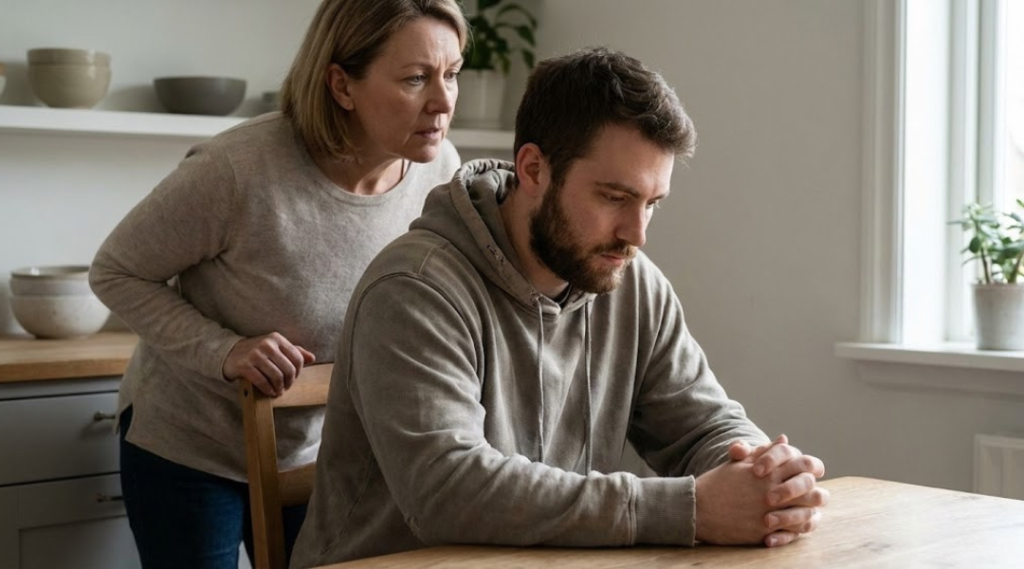
This pattern often develops when an emotionally immature mother attempts to meet her emotional needs through her son, burdening him excessively with her emotional support. This might grow out of her unmet needs or anxiety about his independence. What happens is that personal boundaries become blurred, especially for the sun; he may struggle to maintain his own identity and autonomy.
In extreme cases, mother-son enmeshment appears like “emotional incest.” When a mother effectively turns her son into a surrogate partner, the worst thing the son can hear from his mother is, “You know me so much better than your father.” Sometimes, even sexual boundaries can become blurred, resulting in inappropriate comments, touching, or seduction.The Difference Between Love and Emotional Fusion
Healthy love says, “I care about you and want you to thrive—even if that means making choices I wouldn’t make.” Enmeshment says, “Your choices affect me so deeply that I can’t be okay unless you do what I need.”
In my practice, I help individuals and families understand that creating boundaries isn’t about loving less. It’s about loving in a way that allows both people to develop healthy self-esteem, grow, and become who they’re meant to be.
Signs You Might Be Experiencing Enmeshment
When Every Emotion Becomes Shared
“When my mom is upset, I physically can’t focus on anything else,” Jake told me during our first session. “It’s like her anxiety becomes my anxiety, instantly.” This emotional fusion—where you can’t regulate your own feelings without managing the other person’s first—is exhausting.
You might notice that:
- Your mood instantly shifts to match theirs
- Their disappointment feels unbearable
- You can’t make decisions without considering their emotional reaction first
- Your own feelings get lost in managing theirs
When Other Relationships Can’t Compete
I often hear from sons whose romantic relationships keep failing because no partner can compete with mom’s needs. Or from mothers who feel threatened every time their son connects with someone new. This isn’t only engulfment—it’s a nervous system that’s learned that separation equals danger.
“Every girlfriend I’ve had eventually says the same thing,” Marcus shared. “That I’m already in a relationship—with my mother. And the worst part is, they’re not wrong.”
When Independence Feels Like Betrayal
The mere thought of setting a boundary might flood you with guilt. Moving away, making a decision without consultation, or simply saying “no” can feel like you’re committing an unforgivable act of cruelty. This guilt isn’t rational—it’s your nervous system’s learned response to a pattern that’s been in place for years.
How Enmeshment Develops and Why It Persists
The Stories Our Families Tell Us
In my work with individuals and families, I’ve noticed that enmeshment often begins with loss or instability. Maybe dad left, and suddenly mom and son became each other’s everything. Maybe there was addiction, illness, or chaos that made their bond feel like the only safe thing in an unsafe world. More often, when the parents’ relationship is distant or highly conflictual, the mother turns to the son to meet her emotional needs instead of her husband.
“After my dad died, it was just us against the world,” one mother reflected. “I didn’t realize I’d made my son my partner instead of letting him be my child.”
When Children Become Emotional Caretakers
Sometimes sons learn early that their job is to keep mom happy, stable, or safe. They become little adults, emotional partners, confidants for adult problems they’re not equipped to handle. This role reversal might feel special at the time—being mom’s “little man”—but it plants seeds of responsibility that shouldn’t be there.
What helped you both survive back then is now keeping you stuck. The closeness that once felt like safety now feels like suffocation, but stepping back feels impossible.
The Path Forward: How Therapy Creates Change
Learning to Breathe Separately
In our sessions, I don’t try to break your bond—I work to help you transform it. We start by simply noticing: What happens in your body when you think about disagreeing with your mother? What do you feel when your son makes a choice without consulting you?
These body sensations are information. They tell us where the work needs to happen. Through gentle, trauma-informed approaches, we help your nervous system learn that separation doesn’t mean abandonment, that boundaries don’t mean rejection.
Discovering Who You Are Apart From Each Other
Mothers who are enmeshed with their sons generally resist recognizing the dynamic. They may not have the self-awareness or self-reflective abilities to do so. This can make it very difficult to recognize how their behaviors negatively impact their son, and If they are intensely self-preoccupied or lacking in empathy, they may never admit their boundaries are inappropriate. “I don’t even know what I like,” Cole said after realizing how enmeshed he’d been with his mother. “Every choice I make is filtered through what she might think or need.”

I often say, “When you can name it, you can tame it”, so recognizing and identifying the problem is the first step. Part of our work involves rediscovering your individual identity. What are your own thoughts, separate from theirs? What do you want when you’re not managing their feelings? We work to clarify your personal values and prioritize your chosen relationship. This process can feel scary and exhilarating—like meeting yourself for the first time.
Creating New Ways to Connect
The goal isn’t to destroy your relationship—it’s to rebuild it on healthier ground. Often these patterns are deeply entrenched, and there can be resistance to change. I work to help individuals and families learn to:
- Learn what healthy boundaries and limits are and how to set them
- Express love without emotional fusion
- Support each other without sacrificing themselves
- Maintain closeness while respecting autonomy
- Handle conflict without threats of abandonment
What Healing Actually Looks Like
For Sons Breaking Free
Michael came to therapy unable to maintain a relationship longer than six months. Every partner felt like they were competing with his mother—because they were. Through our work together, he learned to recognize when guilt was driving his choices, when he was prioritizing his mother’s emotions over his own life.
“I can love my mom and still have my own life,” he told me months later. “I thought those were mutually exclusive. They’re not.” He noted that “it’s scary standing up to her, but I’m getting better at it, and finally recognize I deserve my own life.”
For Mothers Rediscovering Themselves
“I didn’t know who I was outside of being his mother,” Janet shared. “When he started setting boundaries, I panicked. But then I realized—I get to have my own life too.”
Many mothers discover that releasing enmeshment doesn’t mean losing their son—it means gaining themselves back. They can rediscover friendships, interests, and parts of themselves that got lost in the fusion.
Why This Work Matters
Enmeshment doesn’t just affect the two people involved. It ripples out, impacting:
- Every romantic relationship the son attempts
- The mother’s ability to form other meaningful connections
- Future grandchildren who might inherit these patterns
- Extended family dynamics
- Everyone’s mental and physical health
When you heal these patterns, you’re not just changing your own life—you’re breaking cycles that might have existed for generations.
Beginning Your Journey to Healthier Connection
If you recognize yourself in these words, know that you’re not alone. At Jim Brillon Therapy, I’ve guided individuals and families through this delicate process of untangling while staying connected. It’s possible to love deeply while breathing freely. It’s possible to be close without being consumed.
The work is often complex, as culture can play an important role in enmeshed family relationships.
The fact that you’re reading this suggests part of you already knows something needs to change. Trust that knowing. Your relationship can transform from a source of anxiety and guilt into one of genuine support and healthy love.
Frequently Asked Questions About Mother-Son Enmeshment
What’s the difference between being close and being enmeshed?
Healthy relationships have breathing room. Each person respects the other’s boundaries and limits. You can disagree without panic, make independent choices without guilt, and maintain other relationships without jealousy. Enmeshment feels like you’re sharing one life between two people—every choice, emotion, and experience must be filtered through the other person first.
Can we maintain a relationship while healing enmeshment?
Absolutely. In fact, most of my clients find their relationship improves once healthy boundaries are established. The love becomes less anxious, less controlling, more genuinely supportive. You’re not ending the relationship—you’re transforming it into something healthier.
How do I deal with the guilt when setting boundaries?
That guilt is most often misplaced and conditioned. It can feel like your nervous system’s alarm bell, warning you about a “danger” that isn’t real. In therapy, we work with these feelings gently, understanding they’re trying to protect you. As your system learns that boundaries are safe, the guilt gradually lessens.
What if only one of us wants to change?
Individual therapy can still create significant shifts. When one person changes their part of the pattern, the entire dynamic has to adjust. While it’s ideal for both people to participate, don’t let your mother’s or son’s reluctance stop you from seeking help.
How long does it take to heal enmeshment patterns?
Every situation is unique, but most clients begin noticing shifts within a few months—small moments of choosing differently, feeling less guilty, or recognizing patterns as they happen. Deeper transformation typically unfolds over 6-12 months as new patterns become established.
Will therapy blame my mother or make me resent her?
It’s not about blame, but discovering reasons. I approach this work with deep compassion for both people. Usually, enmeshment develops from anxiety and emotional immaturity, not necessarily malice. Setting limits within an enmeshed mother takes courage, and is not easy, especially at first. You can expect pushback and a period of disequilibrium before the system develops a better balance. We honor the care while addressing the patterns that no longer serve you.
Ready to transform your relationship from enmeshment to healthy connection? Contact Jim Brillon Therapy to begin your journey toward authentic independence and genuine intimacy.